
Introduction
Artificial intelligence has completely changed the way people write online. Whether you’re a blogger, marketer, student, or small business owner, AI writing tools can help you draft content faster, fix grammar mistakes, and even optimize your work for search engines. But with so many options available in 2026, choosing the right one can feel overwhelming.
In this guide, we’ll break down the best AI writing tools on the market today, compare their strengths and weaknesses, and help you decide which one fits your needs and budget.
Why Use an AI Writing Tool?
Before diving into the list, it’s worth understanding why millions of people now rely on AI writing assistants:
- Speed: Generate a full blog post outline in seconds instead of hours.
- Consistency: Maintain a consistent tone and style across all your content.
- SEO Optimization: Many tools now include built-in keyword and readability suggestions.
- Cost Savings: Reduce the need for large writing teams or expensive freelancers.
- Idea Generation: Beat writer’s block with instant topic and outline suggestions.

Top AI Writing Tools Compared
1. Claude by Anthropic
Claude has become a favorite among professional writers and businesses for its natural, human-like tone and strong reasoning ability. It excels at long-form content, technical writing, and maintaining context across lengthy documents.
Best for: Long-form blog posts, technical documentation, nuanced writing Strengths: High-quality output, strong context retention, minimal “AI-sounding” text Weaknesses: No built-in SEO scoring tools
2. ChatGPT (OpenAI)
ChatGPT remains one of the most widely used AI writing tools thanks to its versatility. It can write anything from social media captions to full articles and even assist with coding-related content.
Best for: General-purpose writing, brainstorming, quick drafts Strengths: Fast, flexible, large plugin ecosystem Weaknesses: Can produce generic-sounding content without careful prompting
3. Jasper AI
Jasper is built specifically for marketers and businesses. It offers brand voice customization and templates designed for ads, emails, and landing pages.
Best for: Marketing teams and agencies Strengths: Brand voice tools, marketing-specific templates Weaknesses: Higher price point than competitors
4. Copy.ai
Copy.ai focuses on short-form content like ad copy, product descriptions, and email subject lines. It’s popular among e-commerce businesses.
Best for: E-commerce and short-form marketing copy Strengths: Easy to use, affordable plans Weaknesses: Less effective for long-form blog content
5. Surfer AI
Surfer combines AI writing with real-time SEO data, making it a strong choice for content creators focused purely on ranking in search engines.
Best for: SEO-focused content creation Strengths: Built-in keyword optimization, content scoring Weaknesses: Requires a learning curve for beginners
How to Choose the Right AI Writing Tool
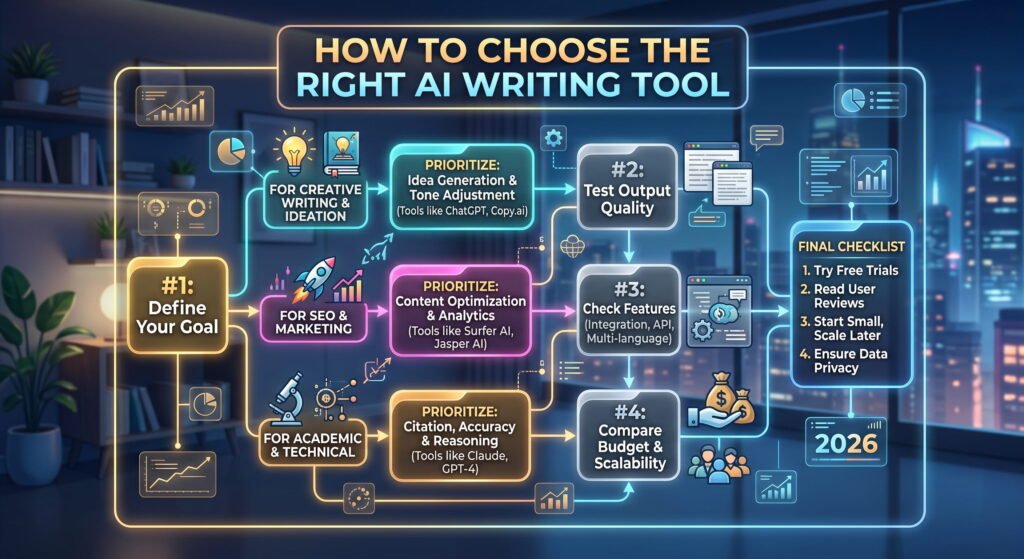
When deciding which tool fits your needs, consider the following:
- Purpose: Are you writing blog posts, marketing copy, or technical content?
- Budget: Free tools work for casual use, but serious content creators may need a paid plan.
- SEO Needs: If ranking on Google is a priority, choose a tool with built-in SEO features.
- Team Size: Larger teams benefit from tools with collaboration and brand voice features.
Final Verdict
There’s no single “best” AI writing tool for everyone. If you want the most natural, human-like long-form writing, Claude is a top pick. For marketing-heavy teams, Jasper offers more specialized templates. If SEO is your main goal, Surfer AI’s data-driven approach is hard to beat.
The right choice ultimately depends on your specific content goals, budget, and workflow.
Frequently Asked Questions
Is AI writing content good enough to rank on Google?
Yes, as long as the content is high-quality, well-edited, and provides real value to readers. Google’s guidelines focus on content quality, not whether it was written by a human or AI.
Can AI writing tools replace human writers?
Not entirely. AI tools work best as assistants that speed up the writing process, but human editing and fact-checking remain essential for accuracy and originality.
Are AI writing tools free to use?
Most offer a free trial or limited free plan, but advanced features typically require a paid subscription.