Introduction
A Virtual Private Network (VPN) has become an essential tool for anyone who values online privacy, wants to access geo-restricted streaming content, or simply wants a more secure connection on public Wi-Fi. With dozens of VPN providers on the market, choosing the right one can be confusing.
This guide compares the top VPN services in 2026 based on privacy protection, streaming performance, speed, and value for money.
Why You Need a VPN
- Privacy Protection: A VPN hides your IP address and encrypts your internet traffic, preventing ISPs and third parties from tracking your activity.
- Public Wi-Fi Security: Using a VPN on public networks (cafes, airports, hotels) protects you from potential hackers on the same network.
- Access Geo-Restricted Content: VPNs let you access streaming libraries and websites that may be restricted in your region.
- Avoid Bandwidth Throttling: Some ISPs slow down connections for certain types of traffic; a VPN can help bypass this.
What to Look for in a VPN
- No-logs policy: The provider should not store records of your browsing activity.
- Server network size: More servers across more countries generally means better speed and streaming access.
- Speed: A good VPN shouldn’t noticeably slow down your connection.
- Device compatibility: Look for apps across all your devices, including routers and smart TVs.
- Kill switch feature: This automatically cuts your internet if the VPN connection drops, preventing data leaks.
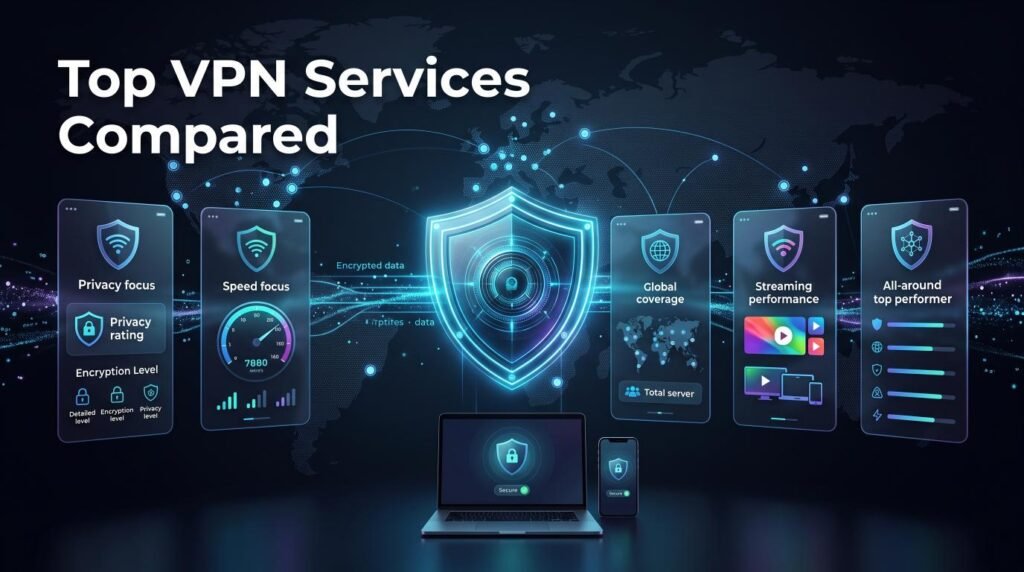
Top VPN Services Compared
1. NordVPN
NordVPN is known for its large server network, strong encryption standards, and consistently fast speeds, making it a solid all-around choice for both privacy and streaming.
Best for: All-around privacy and streaming performance Standout feature: Threat protection that blocks malware and trackers automatically
2. ExpressVPN
ExpressVPN has built a reputation for reliability and ease of use, with apps available across nearly every device and platform.
Best for: Beginners who want simplicity without sacrificing security Standout feature: Consistently fast speeds across global server locations
3. Surfshark
Surfshark stands out by allowing unlimited simultaneous device connections on a single plan, making it a great value option for families or multi-device households.
Best for: Budget-conscious users with multiple devices Standout feature: Unlimited device connections on one subscription
4. ProtonVPN
Built by the team behind ProtonMail, ProtonVPN places a heavy emphasis on privacy, with a strict no-logs policy and open-source apps that can be independently audited.
Best for: Privacy-focused users Standout feature: Strong free-tier option with no data caps
5. CyberGhost
CyberGhost offers dedicated streaming-optimized servers, making it easy to connect specifically to servers built for accessing popular streaming platforms.
Best for: Streaming-focused users Standout feature: Servers labeled specifically by streaming service for easy access
VPN Pricing in 2026
Most reputable VPN providers charge between $3-$12 per month, with significant discounts for longer-term plans (1-2 years). Free VPNs exist but often come with data limits, slower speeds, or weaker privacy protections, so they’re best used only for occasional, light use.
Final Thoughts
The best VPN for you depends on your priorities. If privacy is your main concern, ProtonVPN’s strict no-logs approach stands out. If streaming access matters most, CyberGhost’s dedicated streaming servers make things simple. For most users who want a reliable all-around option, NordVPN and ExpressVPN remain strong choices.
Frequently Asked Questions
Is using a VPN legal?
Yes, VPNs are legal in most countries, though a few nations restrict or ban their use. Always check local regulations before using one.
Can a VPN slow down my internet speed?
Some speed reduction is normal due to encryption, but a high-quality VPN should keep this minimal and barely noticeable during everyday use.
Do I need a VPN if I only browse at home?
While the risk is lower on a private home network, a VPN still adds privacy benefits by preventing your ISP from tracking your browsing activity.